
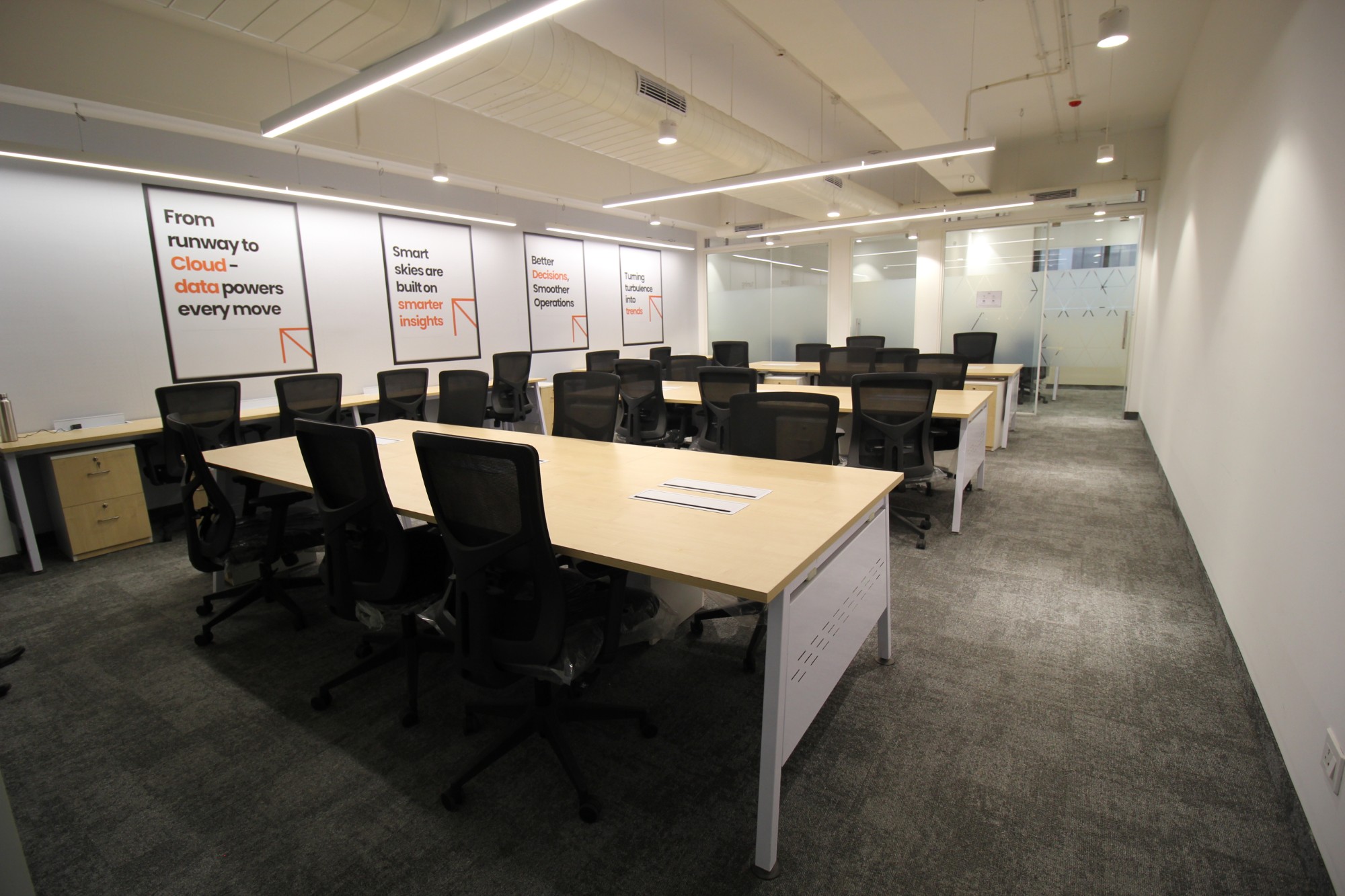
Managed Office vs Conventional Lease in Gurgaon: A Framework for Capital Responsibilities, Operating Commitments and Exit Obligations
Choosing between a managed office and a conventional lease determines who designs the workplace, operates its services and resolves failures. For an enterprise, the decision must reflect the maturity of the local operation, internal management capacity and confidence in future space requirements.
A managed office can consolidate responsibilities under a workspace provider. A conventional lease can give the occupier greater direct control over the premises and its appointed suppliers. Neither structure provides operational certainty without a clear specification and agreement.
For enterprises evaluating office space in Gurgaon, the appropriate comparison is between complete operating arrangements. The objective is to establish which structure can support the business consistently throughout occupation, expansion and eventual departure.
Define the Operating Mandate Before Selecting a Structure#
Start with the activities the office must support. A new GCC establishing local operations may need a different arrangement from a mature headquarters with established facilities and procurement teams.
Specify working hours, security requirements, confidentiality, technical dependencies and expected attendance. Identify which features require customisation and which can be delivered through an existing configuration.
| Decision area | Managed office assessment | Conventional lease assessment |
|---|---|---|
| Workplace delivery | Confirm provider responsibility for design, installation and acceptance | Establish the occupier's project team and appointed delivery partners |
| Capital responsibilities | Identify included assets, enterprise-specific works and ownership at departure | Define fit-out scope, procurement authority and asset responsibilities |
| Daily operations | Verify included services, exclusions and escalation ownership | Allocate facilities management and supplier governance responsibilities |
| Technical control | Confirm rights to install, configure and administer enterprise systems | Establish permissions for works and coordination with building management |
| Expansion and exit | Examine specific commitments rather than the workspace label | Review premises rights, alteration conditions and handback requirements |
Use the same operating specification when requesting both types of proposal. Without this discipline, the organisation may compare an equipped service arrangement with premises requiring substantial additional delivery work.
Allocate Capital Responsibilities and Asset Ownership#
Capital responsibility involves decisions about who specifies, procures, installs, maintains and ultimately removes workplace assets.
For a managed office, identify which elements form part of the provider's standard configuration and which are enterprise-specific. Network equipment, access controls, acoustic improvements and specialist work settings may require separate responsibilities.
For a conventional lease, establish the occupier's obligations for design approvals, construction coordination, commissioning and future alterations. Clarify interfaces with the landlord's building systems before finalising the fit-out brief.
In either structure, record asset ownership and maintenance responsibility. Determine who may modify equipment, how warranties are retained and what must remain or be removed at departure.
The agreement should also address incomplete works, defects and changes requested after design approval. An asset schedule supports operational accountability and reduces uncertainty when teams or providers change.
Examine Service Governance and Operational Control#
An integrated provider arrangement can simplify coordination, but only if responsibility is explicit. Determine who owns each service outcome when the provider depends on building management or subcontractors.
For power, cooling, connectivity, security and maintenance, define the service boundary, operating hours and escalation process. Distinguish acknowledgement of an incident from restoration and permanent resolution.
A conventional lease may allow more direct supplier appointments, but the enterprise must have the capability to coordinate them. Identify the internal owner responsible for performance reporting, maintenance planning and cross-vendor incidents.
For managed office space in Gurgaon, assess how much administrative and technical control the enterprise retains. Provider management should not prevent the occupier from meeting its own security or reporting requirements.
Delivery Readiness Must Be Demonstrated#
A proposed move-in date is credible only when design, installation and acceptance activities support it.
Create a delivery programme covering layout approval, infrastructure works, technology installation, testing and occupation readiness. Identify dependencies requiring the enterprise, provider or building owner to act.
An existing managed office may shorten some delivery activities, while customised requirements can introduce additional work. A conventional lease may require a broader project programme. Neither should be judged through a generic delivery promise.
Inspect the actual premises and verify the delivered configuration. Confirm capacity, privacy, accessibility, emergency arrangements and the support available during the transition.
Keep unresolved items in an acceptance register with named owners and closure evidence. The operational team should understand what has been accepted and what remains conditional before employees move.
Workforce plans change through hiring, new mandates, attendance policies and organisational restructuring. Evaluate both structures under contraction, expected growth and accelerated expansion.
For office space in Udyog Vihar, MG Road or Sohna Road, identify whether future capacity can be delivered in the required location and configuration.
Additional space may require infrastructure upgrades, fresh approvals or a separate delivery programme. A provider's wider portfolio does not establish that adjacent capacity will be available when needed.
Specify activation notice, delivery milestones, permitted alterations and responsibility for coordinating change. Clarify whether later phases align with the original agreement or create separate commitment periods.
The structure should support the organisation's likely changes without relying on informal assurances.
Review Exit Obligations Before Occupation#
The end of occupation deserves the same attention as handover.
Establish notice requirements, applicable commitments, reinstatement scope, asset removal and the condition in which the premises must be returned. Review what happens to enterprise-installed equipment and provider-owned assets.
Include technology and information handling. Specify credential revocation, network decommissioning, data retrieval and the treatment of information retained in shared systems.
For a managed office, clarify the transition support available when moving to another location. For a conventional lease, establish how the occupier will coordinate suppliers, works and handback inspections.
A clear departure process protects continuity and reduces unresolved obligations after the operational team has left.
Select the Structure that Enterprise Can Govern#
The final decision should explain how responsibilities are allocated, which controls remain with the occupier and how service performance will be verified.
Involve business leadership, facilities, technology, security and procurement before selecting the structure. A model that works for one enterprise may fail for another with different internal capabilities.
When approaching Onward Workspaces, provide the operating specification, change scenarios and acceptance requirements. Request a property-specific proposal that makes delivery, service and exit responsibilities reviewable.
Frequently Asked Questions#
What is the main operational difference between a managed office and a conventional lease?#
A managed office typically combines premises with an agreed service scope. A conventional lease generally requires the occupier to arrange more workplace delivery and operating responsibilities. The actual agreement determines the allocation.
Does a managed office automatically provide flexibility?#
No. Flexibility depends on documented expansion, resizing, notice and exit provisions rather than the workspace category.
What capital responsibilities should enterprises clarify?#
Identify responsibility for design, procurement, installation, maintenance, asset ownership, alterations and removal or retention at departure.
How should enterprises compare the two structures?#
Use a common operating specification and assess delivery readiness, service accountability, technical control, change scenarios and exit obligations.